Twilight in Ottawa After Sunset — Civil, Nautical & Astronomical
Contents
Why Twilight Is Often Better Than the Sunset Itself
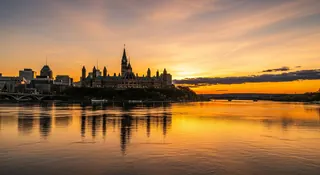
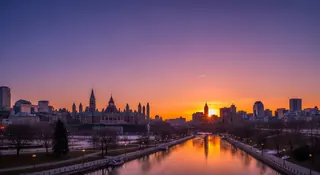
Here's a secret that experienced sunset watchers know: the most spectacular colors often appear not during the sunset itself, but in the 15 to 30 minutes afterward. Many people pack up and leave when the sun drops below the horizon, missing the best part of the show. In Ottawa, the post-sunset twilight period regularly produces vivid displays of deep orange, magenta, and purple that surpass the sunset in both intensity and drama.
This happens because after the sun drops below the horizon, its light continues to illuminate the atmosphere from below. This light travels through the maximum amount of atmosphere, scattering short wavelengths completely and allowing only the warmest reds and oranges to reach Ottawa's sky. At the same time, the darkening upper sky provides contrast that makes these warm colors pop dramatically.
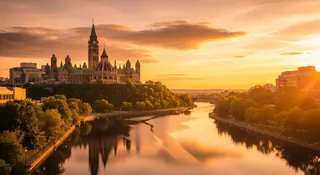
Clouds that appeared gray or neutral during the sunset itself often ignite with color during twilight. The undersides of mid-level clouds catch the hidden sun's warm light and glow vivid pink, orange, and red — sometimes covering the entire sky in a dome of color that no moment during the actual sunset matched.
The lesson: never leave a sunset early. Stay at least 20-30 minutes after the sun disappears, and you'll frequently be rewarded with Ottawa's most breathtaking sky displays.
The Three Phases of Twilight in Ottawa
Astronomers define three distinct twilight phases based on the sun's position below the horizon. Each phase has different characteristics and practical implications:
1. Civil Twilight (Sun 0° to 6° below horizon)
This is the first phase after sunset and the one most people associate with "dusk." During civil twilight:
- The sky is still bright enough for outdoor activities without artificial lighting
- The horizon is clearly visible
- This is when the most vivid post-sunset colors appear
- Street lights typically switch on during this phase
- Duration in Ottawa: Approximately 30-35 minutes year-round
2. Nautical Twilight (Sun 6° to 12° below horizon)
Named because sailors could traditionally still see the horizon clearly enough for celestial navigation:
- The brightest stars and planets become visible
- The western horizon still glows with a fading band of warm color
- Artificial lighting is needed for most outdoor activities
- The sky often shows beautiful gradients from deep blue to orange near the horizon
- Duration in Ottawa: Approximately 30-40 minutes
3. Astronomical Twilight (Sun 12° to 18° below horizon)
The final phase before complete darkness:
- Only a very faint glow may remain on the horizon
- Stars become fully visible (away from light pollution)
- In downtown Ottawa, light pollution makes this phase less noticeable
- Telescope observations become possible once astronomical twilight ends
- Duration in Ottawa: Approximately 30-40 minutes
How Twilight Duration Changes by Season in Ottawa
Twilight duration in Ottawa varies somewhat throughout the year due to the angle at which the sun crosses below the horizon:
| Season | Civil Twilight | Total Twilight (to full dark) | Characteristics |
|---|---|---|---|
| Winter solstice | ~32 min | ~95 min | Short, distinct phases, vivid colors |
| Spring equinox | ~33 min | ~100 min | Moderate duration, varied colors |
| Summer solstice | ~37 min | ~130+ min | Extended, gradual, lingering light |
| Fall equinox | ~33 min | ~100 min | Moderate, often vivid |
The most dramatic seasonal difference is around the summer solstice, when the sun crosses the horizon at such a shallow angle that twilight seems to last forever. In late June, Ottawa doesn't reach full astronomical darkness until after 11:00 PM — and the sky never gets truly dark, maintaining a faint glow on the northern horizon throughout the short "night."
In contrast, winter twilight is shorter and more abrupt. The sun drops below the horizon at a steeper angle, progressing through the twilight phases more quickly. This creates a faster transition from sunset to darkness, but the compressed timeline often produces more intense colors in a shorter window.
Twilight Photography in Ottawa
The twilight period offers unique photography opportunities distinct from sunset itself:
Civil Twilight — The Color Phase
This is when the sky often shows its most vivid colors. Camera settings: ISO 400-800, f/5.6-f/8, shutter speed 1/30-1/125s. A tripod becomes increasingly useful as light fades. The combination of colorful sky and emerging city lights creates beautiful urban landscape images.
Blue Hour (Late Civil / Early Nautical Twilight)
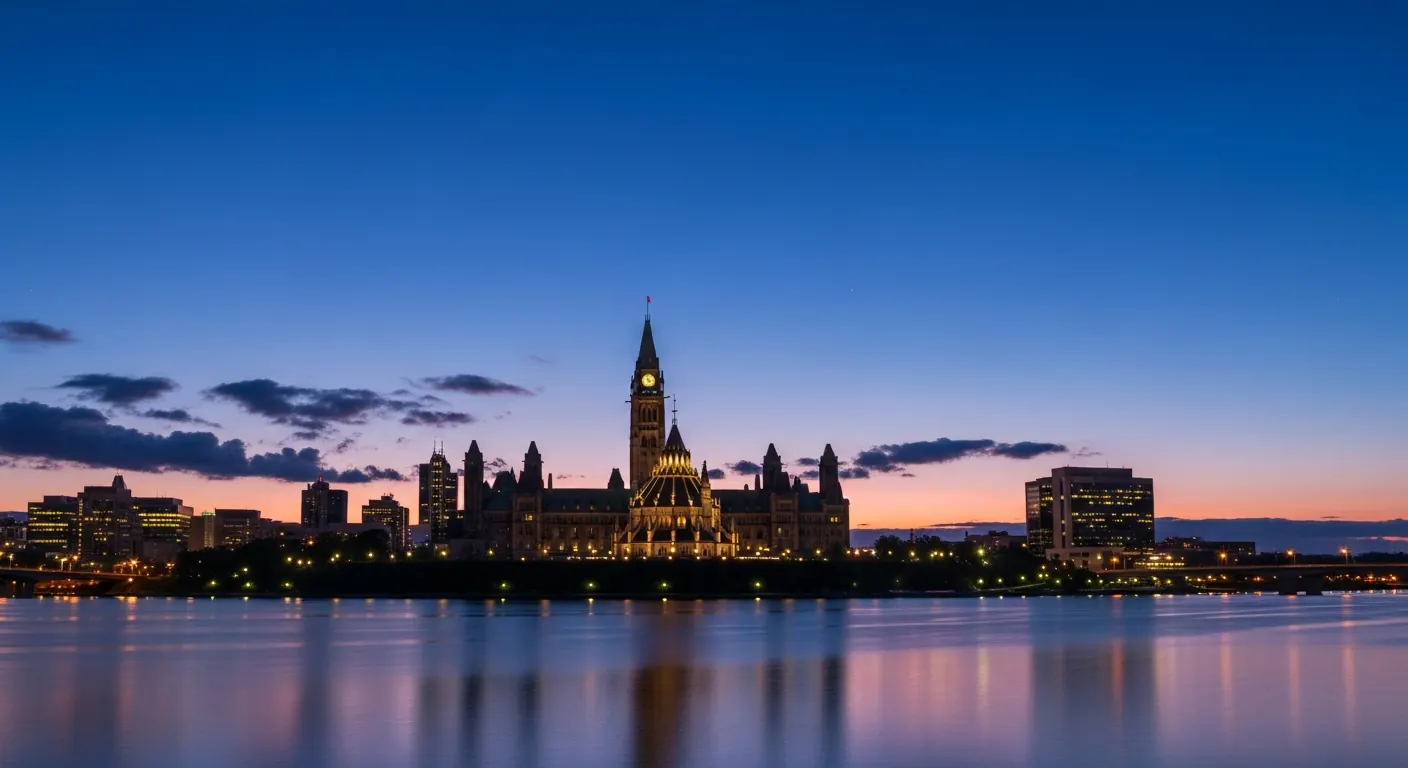
The "blue hour" occurs when the sky transitions from warm twilight colors to deep blue. This is when Ottawa's illuminated landmarks — Parliament Hill, the Château Laurier, bridge lights — stand out beautifully against the colored sky. Camera settings: ISO 400-1600, f/8-f/11, shutter speed 1-10 seconds (tripod essential).
Best Twilight Photography Spots
- Nepean Point: Parliament Hill's illumination during blue hour creates stunning compositions against the colored western sky
- Rideau Canal: City lights reflecting in the calm canal water during twilight produce symmetrical, glowing images
- Britannia Beach: The fading sky over the dark lake creates minimalist compositions during twilight
- Alexandra Bridge: Walking across the illuminated bridge during twilight offers views in both directions — toward Parliament and toward Gatineau's landmarks
What to Do in Ottawa During Twilight
Twilight in Ottawa is a magical time that's perfect for activities beyond just watching the sky:
Evening Walks
The Rideau Canal pathways, Ottawa River Parkway, and ByWard Market streets are all beautiful during twilight. The fading sky, emerging lights, and cooling temperatures create a romantic, atmospheric setting for walking. The pathways along the canal between Dow's Lake and the canal locks are particularly scenic.
Outdoor Dining
Ottawa's patio culture peaks during twilight hours. The warm colors of the fading sky, combined with the ambient glow of restaurant lighting, create an ideal dining atmosphere. ByWard Market restaurants, Elgin Street patios, and Westboro's Richmond Road restaurants all offer excellent twilight dining.
Stargazing After Twilight
Once astronomical twilight ends, Ottawa offers reasonable stargazing opportunities — especially from locations away from the downtown core. The Dominion Observatory grounds and Gatineau Park provide dark enough skies to see the Milky Way on clear nights. The transition from twilight to starlight is a natural extension of the sunset experience.
Firefly Watching (June-July)
During late civil and nautical twilight in June and July, Ottawa's parks and natural areas come alive with fireflies. Watching these bioluminescent insects against the fading twilight sky is one of the city's most enchanting summer experiences. Try Vincent Massey Park, Mud Lake, or the Arboretum.
Frequently Asked Questions
Explore Ottawa's Best Sunsets
Use our interactive tools to find the perfect sunset viewing experience.