Golden Hour in Ottawa — When, Where & How to Enjoy It
Contents
What Is Golden Hour and When Does It Happen in Ottawa?
Golden hour is the period of time shortly after sunrise or before sunset when the sun is low on the horizon, producing warm, diffused, golden-toned light. This light is prized by photographers, filmmakers, and anyone who appreciates natural beauty for its flattering quality — it softens shadows, warms skin tones, and transforms ordinary scenes into extraordinary ones.
Technically, golden hour occurs when the sun is between about 6 degrees above the horizon and 0 degrees (the actual sunset/sunrise point). In Ottawa, this translates to approximately 60-90 minutes before sunset for the evening golden hour, and the same period after sunrise for the morning version. The exact duration varies significantly by season due to Ottawa's relatively high latitude of 45.42° N.
In Ottawa, the evening golden hour is the most popular and accessible. As the afternoon progresses, the sunlight passes through an increasingly thick layer of atmosphere. This longer path scatters the shorter blue wavelengths and allows the longer warm wavelengths — oranges, reds, and yellows — to dominate. The result is that distinctive golden glow that makes Ottawa's landscapes, architecture, and waterways look magical.
Use our sunset calculator to find today's exact golden hour start time — it shows the precise beginning and end of golden hour for any date.
How Golden Hour Changes Throughout the Year in Ottawa
The duration and character of golden hour in Ottawa varies dramatically by season, largely because of how the sun's angle relative to the horizon changes as the Earth orbits:
| Season | Golden Hour Duration | Approximate Start | Character |
|---|---|---|---|
| Winter (Dec-Feb) | ~45-55 minutes | ~55 min before sunset | Intense, vivid, short |
| Spring (Mar-May) | ~60-75 minutes | ~70 min before sunset | Warm, lengthening |
| Summer (Jun-Aug) | ~80-100 minutes | ~90 min before sunset | Extended, soft, warm |
| Fall (Sep-Nov) | ~60-75 minutes | ~70 min before sunset | Clear, vivid, dramatic |
Why Summer Golden Hour Is Longer
In summer, the sun approaches Ottawa's horizon at a very shallow angle — it seems to hang above the horizon for an extended period before finally setting. This shallow descent means the sun spends more time in the "golden" zone (below 10 degrees elevation), stretching the golden hour considerably.
In winter, the opposite occurs. The sun's path is steeper relative to the horizon, meaning it drops from full daylight to sunset more quickly. The result is a shorter but more intense golden hour — the warm light is concentrated into a tighter time window, often producing more vivid colors despite the briefer duration.
The "Sweet Spot" Months
September and October offer what many consider Ottawa's ideal golden hour — long enough to enjoy thoroughly (about 70 minutes), but with clear autumn air that makes the warm light exceptionally vivid. Combined with fall foliage, these months produce Ottawa's most photogenic golden hour conditions.
Best Places to Experience Golden Hour in Ottawa
Golden hour light transforms Ottawa's landmarks and landscapes. Here are the best locations to experience this magical illumination:
Parliament Hill
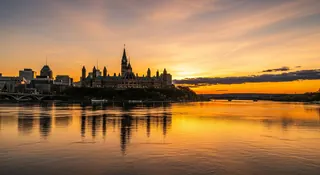
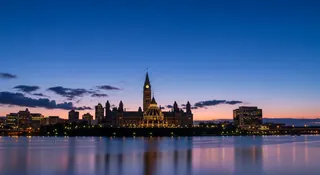
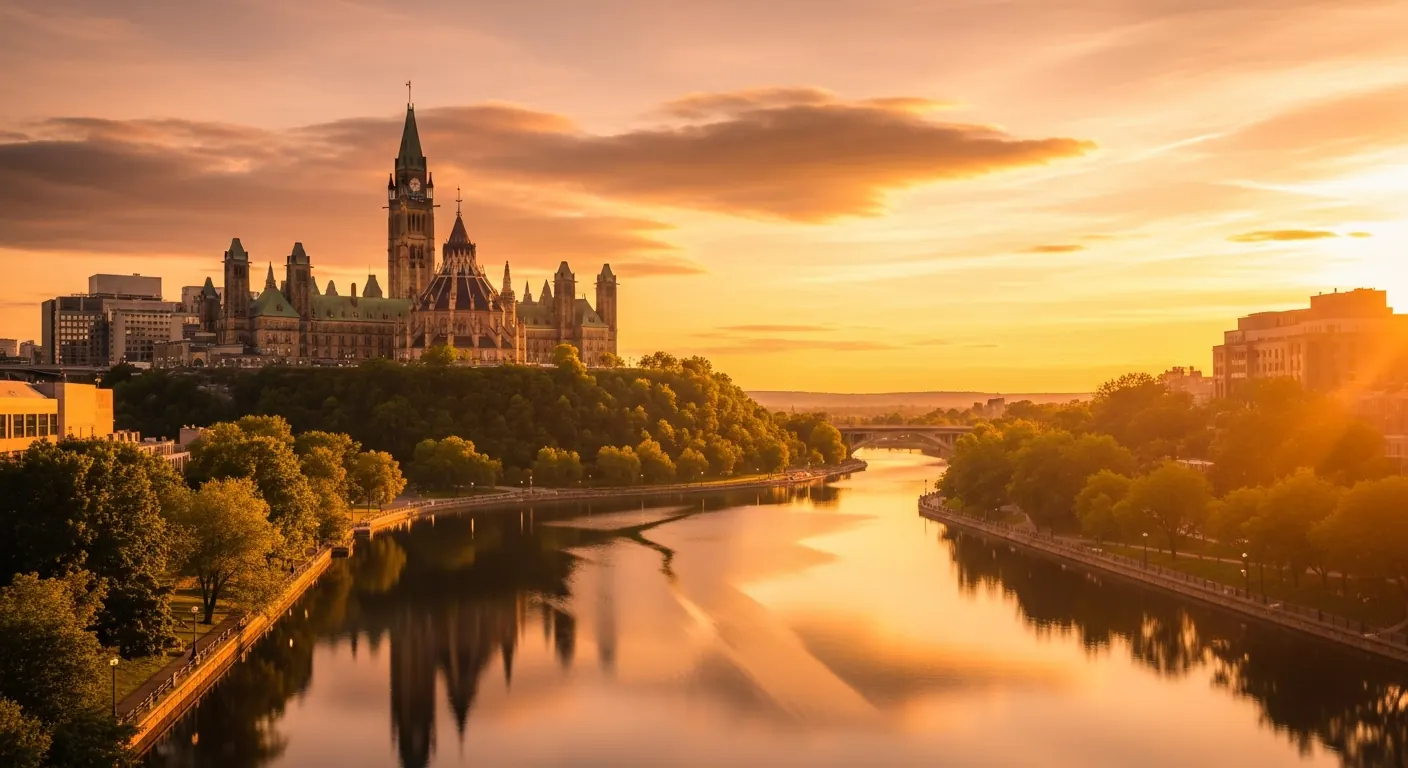
Parliament Hill's Gothic Revival architecture glows magnificently during golden hour. The warm light catches the carved stone details of the Centre Block, Peace Tower, and Library of Parliament, creating a warm, honey-toned spectacle. Stand on Major's Hill Park or Nepean Point to see Parliament bathed in golden light with the river below.
ByWard Market Streets
The low-angle golden hour light shining down Ottawa's east-west streets creates dramatic shafts of warm illumination between the historic ByWard Market buildings. Street photography during golden hour in the Market is exceptionally rewarding — people, bistro tables, and stone facades all glow in the warm light.
Rideau Canal
The Rideau Canal's tree-lined banks catch golden hour light beautifully. The water surface reflects the warm tones, and the canal's north-south orientation means the golden light rakes across the scene from the side, creating beautiful shadow patterns and texture.
Britannia Beach
Britannia Beach's west-facing shore receives the full force of golden hour light. The sand glows warm, the water reflects gold, and anyone on the beach is backlit with a warm rim of light. This is one of Ottawa's most photogenic golden hour settings.
Gatineau Park
The Gatineau Hills' forested slopes catch golden hour light dramatically. From elevated viewpoints like the Champlain Lookout, you can see golden light spreading across the Ottawa Valley as the sun descends. During fall foliage season, the combination of autumn colors and golden hour light is breathtaking.
Golden Hour Photography Tips for Ottawa
Golden hour is the most sought-after light for photography, and Ottawa offers exceptional opportunities to use it. Here's how to make the most of this magical light:
Portrait Photography
Golden hour light is universally flattering for portraits. The warm, directional light softens features, reduces harsh shadows, and creates a natural warm glow on skin. In Ottawa, try:
- Backlit portraits: Position your subject with the golden sun behind them for a warm halo effect. Use a reflector or fill flash to illuminate their face.
- Side-lit portraits: Position the sun 45-90 degrees to the side for dramatic, sculpted lighting that emphasizes facial features.
- Best locations for portraits: Major's Hill Park, the Arboretum, ByWard Market cobblestone streets, the Rideau Canal pathways
Landscape Photography
Ottawa's landscapes come alive during golden hour. The low sun angle creates long shadows that reveal texture and depth in the landscape. For best results:
- Shoot toward the sun for dramatic backlighting and silhouettes
- Shoot with the sun behind you for warm, evenly lit landscapes
- Shoot 90 degrees from the sun for the most dramatic shadow and texture effects
- Use a polarizing filter to deepen blue skies and reduce glare on water surfaces
Architecture Photography
Ottawa's architectural landmarks — Parliament Hill, the National Gallery, the Château Laurier, the National War Memorial — are transformed by golden hour light. The warm tones bring out the warmth of stone and copper, and the low angle creates dramatic shadow play on carved details.
For complete photography guidance, see our Ottawa Sunset Photography Guide.
Morning Golden Hour in Ottawa
While evening golden hour gets most of the attention, Ottawa's morning golden hour — the period just after sunrise — is equally beautiful and significantly less crowded. If you're an early riser, morning golden hour offers unique advantages:
Advantages of Morning Golden Hour
- No crowds: Ottawa's popular sunset spots are essentially deserted at sunrise, giving you free reign of the best compositions
- Calm water: Morning air is typically calmer than evening, creating mirror-like reflections on the Ottawa River and Rideau Canal
- Morning mist: Ottawa's rivers often produce morning mist that catches golden light dramatically, creating ethereal scenes that don't occur in the evening
- Eastern light on western landmarks: Parliament Hill and the downtown skyline face east, meaning morning golden hour illuminates their front facades directly — sunset lights them from behind, creating silhouettes
Best Morning Golden Hour Spots
For morning golden hour, the ideal spots are those facing east:
- Across the Ottawa River from Parliament Hill: Jacques-Cartier Park in Gatineau provides a stunning east-facing view of Parliament Hill bathed in morning golden light
- Rideau Canal: The canal's surface often captures beautiful morning reflections of the rising sun
- Petrie Island: The eastern beaches catch the first golden light of day
Our calculator shows both morning and evening golden hour times for any date.
The Science Behind Ottawa's Golden Hour Light
Understanding the physics of golden hour helps you predict and appreciate this daily phenomenon:
Why Is the Light Golden?
Sunlight is a mix of all visible wavelengths (colors). When the sun is high in the sky, the atmosphere scatters some blue light (which is why the sky is blue), but the direct sunlight remains relatively white. During golden hour, when the sun is low on the horizon, light must travel through a much thicker layer of atmosphere — up to 12 times thicker than when the sun is overhead.
This extended path scatters most of the blue and green wavelengths, allowing the warm red, orange, and yellow wavelengths to dominate. The result is the characteristic golden color that gives the period its name.
Why Ottawa's Golden Hour Is Special
Ottawa's mid-latitude position (45.42° N) creates an ideal balance: the sun's approach to the horizon is shallow enough to create extended golden hour periods, but steep enough that the transition from full daylight to golden light is noticeable and dramatic. Cities closer to the equator have very brief golden hours because the sun drops steeply; cities near the Arctic have perpetually golden light in summer because the sun barely sets.
Atmospheric Effects in Ottawa
Ottawa's position in the Ottawa Valley, with its rivers and forests, creates atmospheric conditions that can enhance golden hour. Water vapor from the Ottawa, Rideau, and Gatineau Rivers adds moisture to the air, which scatters light in ways that can soften and warm the golden hour glow. Dust and aerosols from seasonal activities (spring pollen, summer humidity, fall agricultural dust) add variety to the quality and color of golden hour throughout the year.
Frequently Asked Questions
Explore Ottawa's Best Sunsets
Use our interactive tools to find the perfect sunset viewing experience.